Bringing the Dutch Countryside Home: A Practical Guide to the Dutch Style Mill 3D Model
The allure of traditional architecture often lies in its ability to evoke a specific sense of place and history. For enthusiasts of miniature modeling, diorama building, or simply desktop decoration, few structures are as instantly recognizable or charming as the classic windmill. The Dutch Style Mill 3D printable model captures this iconic silhouette, translating the rustic beauty of the Netherlands into a compact, digital format suitable for modern manufacturing. However, selecting the right 3D model for your collection involves more than just aesthetic preference; it requires an understanding of printability, structural integrity, and how the design fits within your broader workflow.
This article explores the distinct characteristics of the Dutch Style Mill STL file, evaluates its suitability for different types of 3D printers, and compares its minimalist cartoon style against other architectural modeling approaches. By understanding the tradeoffs between detail density, support requirements, and final finish, you can determine whether this specific model aligns with your current projects and skill level.
Defining the Aesthetic: Minimalism Meets Tradition
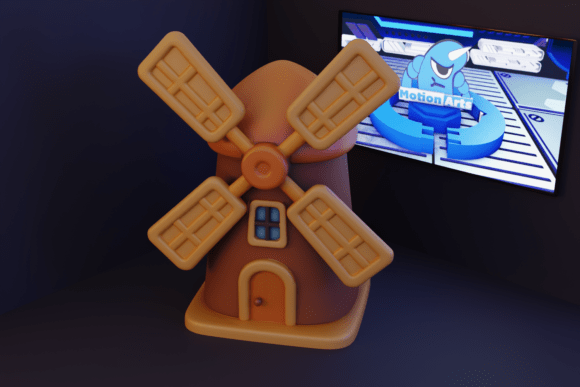
The primary distinguishing feature of this particular Dutch Style Mill is its adherence to a "cartoon minimalist" style. In the realm of 3D printing, architectural models generally fall into two categories: hyper-realistic simulations that prioritize every brick and weathered texture, or stylized representations that focus on shape, proportion, and immediate visual recognition. This model firmly occupies the latter category.
By stripping away excessive micro-details, the design achieves a clean, harmonious proportion that is visually pleasing from a distance. This approach offers several practical advantages. First, it reduces the likelihood of printing errors associated with fragile, thin protrusions common in highly detailed models. Second, the simplified geometry allows for a smoother surface finish with less post-processing effort. For collectors who value the overall form and the nostalgic charm of the Dutch countryside over photorealistic accuracy, this balance between simplicity and classic beauty is ideal.
However, it is important to manage expectations regarding detail. If your goal is to create a museum-grade replica where individual shingles on the roof or the grain of the wood are visible, this minimalist approach may feel too abstract. The charm here is derived from the iconic shape—the tapered tower, the cap, and the sails—rather than intricate texturing. This makes it particularly well-suited for dioramas where the mill is one component of a larger scene, rather than the sole focal point requiring microscopic inspection.
Evaluating Printability: FDM vs. Resin Considerations
One of the most critical factors in choosing a 3D model is its compatibility with your hardware. The Dutch Style Mill is described as compatible with both Fused Deposition Modeling (FDM) and resin (SLA/DLP) printers, but the experience will differ significantly between the two technologies.
For FDM printer users, the "firm structure" mentioned in the model’s description is a significant benefit. FDM printers struggle with overhangs and delicate features. The minimalist design of this mill likely features thicker walls and broader supports, which translates to higher success rates on entry-level machines. However, the requirement for supports is a key consideration. Windmill sails, in particular, present a challenging geometry for FDM printing due to their thin, extended nature. You will need to carefully configure your support settings to ensure the sails print cleanly without leaving excessive marks that require difficult sanding. The "beginner" difficulty level suggests that the model has been optimized to minimize these issues, but some post-print cleanup will still be necessary.
Conversely, resin printer users will find this model easier to handle in terms of fine details. Resin printing excels at capturing the smooth curves and sharp edges of the minimalist style without the layer lines typical of FDM. The support requirement remains, but resin supports are generally finer and easier to remove from smooth surfaces. The result is a cleaner finish straight off the build plate, requiring less sanding and filling. If you plan to paint the model, the resin print will provide a superior base coat, allowing the colors to pop without the distraction of layer artifacts.
Comparing Stylized Models to Realistic Alternatives
When browsing libraries for architectural miniatures, you will encounter a wide spectrum of styles. Understanding where the Dutch Style Mill fits in this landscape helps in making an informed decision. Here is how it compares to other common approaches:
- High-Poly Realistic Models: These files often contain millions of polygons, capturing every nut, bolt, and weathered plank. While impressive, they are notoriously difficult to print. They frequently require complex support structures, long print times, and significant post-processing skills to remove support scars. They are best suited for experienced makers with high-end resin printers.
- Low-Poly Geometric Styles: Some modern designs take minimalism to an extreme, using flat facets and sharp angles. While easy to print, these can look disjointed or overly abstract, losing the organic charm of traditional architecture. The Dutch Style Mill avoids this by maintaining curved, harmonious proportions that feel more natural despite the simplification.
- Kitbash Components: Many modelers prefer buying separate parts (walls, roofs, bases) to assemble custom structures. This offers maximum flexibility but requires advanced assembly and gluing skills. The Dutch Style Mill is a pre-integrated unit, offering convenience and structural integrity at the cost of modularity.
The Dutch Style Mill strikes a middle ground. It is more detailed than low-poly geometric art but far more manageable than high-poly realistic scans. This makes it an excellent choice for intermediate hobbyists who want a polished look without the frustration of failed prints or hours of sanding.
Use Cases and Ideal Applications
Identifying the right application for this model ensures you get the most value from your download. Given its design parameters, here are the scenarios where it shines:
- Diorama Backdrops: In a larger landscape scene, such as a tabletop gaming map or a shelf display, the mill serves as an excellent landmark. Its recognizable silhouette provides context without overwhelming the foreground action. The minimalist style ensures it does not clash with other stylized elements in the scene.
- Beginner Practice Projects: For those new to 3D printing architectural models, this file offers a forgiving learning curve. The firm structure allows for experimentation with different infill densities and support patterns without the high risk of catastrophic failure. It is an ideal candidate for learning how to orient models for optimal strength.
- Decorative Collections: If you are curating a collection of global landmarks or architectural miniatures, this model adds a distinct European flavor. Its clean lines make it suitable for modern interior decor, where overly ornate or cluttered objects might feel out of place.
- Educational Displays: The clear, simplified form makes it useful for educational purposes, such as demonstrating the basic mechanics of windmill structure to students. The lack of visual noise helps focus attention on the fundamental geometry.
Limitations and Decision Factors
While the Dutch Style Mill offers many benefits, it is not a universal solution. Potential buyers should consider the following limitations before downloading:
Scale Constraints: Minimalist models often lose their charm if printed too small, as details become indistinguishable, or too large, where the lack of texture becomes apparent. Determine the intended scale of your project beforehand. This model is likely optimized for standard tabletop scales (such as 28mm to 54mm) or small desktop display sizes (4–6 inches tall).
Support Removal Effort: Despite being beginner-friendly, the note that "support is required" is crucial. The sails and the cap of the mill will generate supports. If you are uncomfortable with removing supports and cleaning up attachment points, you may find the post-processing tedious. Using a resin printer with soluble supports or an FDM printer with easy-breakaway support interfaces can mitigate this, but it remains a factor in the total time investment.
Customization Limits: As a pre-generated STL file, the model is static. You cannot easily modify the number of sails, the shape of the roof, or the base structure without advanced 3D modeling software. If you require a customizable parametric model where you can adjust dimensions dynamically, this static STL will not meet your needs. You would be better served by open-source CAD files or procedural generation tools.
Making the Right Choice for Your Collection
Choosing the right 3D model is ultimately about aligning the file’s characteristics with your goals, skills, and equipment. The Dutch Style Mill is a strong contender if you value aesthetic charm, ease of printing, and a clean, minimalist presentation. It is particularly well-suited for hobbyists who want to add a touch of European countryside nostalgia to their collections without investing hundreds of hours in post-processing.
If you are seeking hyper-realism, have advanced modeling skills, or require fully customizable components, you may need to explore more complex, high-poly alternatives or parametric design resources. However, for the majority of decorators, diorama builders, and beginner-to-intermediate printers, this model offers a balanced, reliable, and visually appealing solution. By bringing the breeze and charm of Holland to your 3D collection, it serves as a testament to the idea that sometimes, less detail allows for more character.