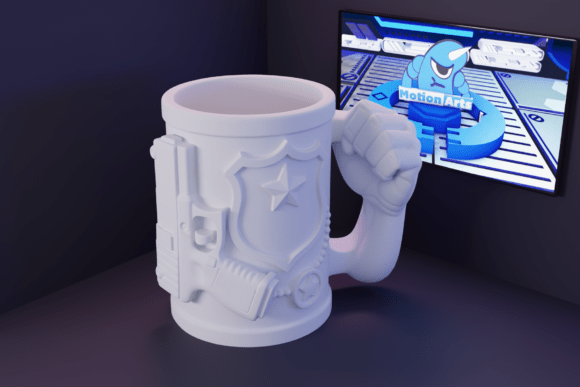
Police Mug: A Practical Guide to 3D Printing and Design
The intersection of functional kitchenware and thematic decor has grown significantly in the maker community. Among the most popular items for this niche is the Police Mug. Whether you are looking to pay tribute to law enforcement heroes, create a unique gift for a colleague, or add a statement piece to your office, a well-designed mug serves both aesthetic and practical purposes. However, transitioning from a digital file to a durable, daily-use object requires more than just clicking "print." Many enthusiasts overlook critical details regarding material safety, structural integrity, and design optimization, leading to disappointing results.
This guide explores the nuances of working with a Police Mug – STL Model for 3D Printing. By understanding common pitfalls and adopting best practices, you can ensure your final product is not only visually striking but also safe and functional.
Understanding the Appeal and Utility
A Caneca Policial (Police Mug) is more than a novelty item; it is a symbol of respect and profession pride. For collectors, it offers a tangible connection to their career or interests. For interior designers or office decorators, it provides a thematic anchor that sparks conversation. The appeal lies in the combination of style and functionality. A successful model captures the essence of the police profession—through badges, emblems, or silhouette shapes—while maintaining the ergonomic standards of a standard drinking vessel.
When evaluating an STL file for this purpose, look for designs that balance intricate detailing with printability. Overly complex geometries may look impressive on screen but can become nightmares during the printing process, requiring excessive support structures that mar the surface finish.
Common Mistakes in Material Selection
The most critical error beginners make is assuming all 3D printing filaments are food-safe. This is a dangerous misconception. Standard PLA, while popular for its ease of use, is porous. These microscopic gaps can harbor bacteria, making the mug unsuitable for holding liquids over time. Furthermore, many filaments contain additives, colorants, or residual chemicals from the manufacturing process that are not intended for human consumption.
The Risk: Using non-food-grade materials for a drinking vessel can lead to health hazards. Even if the filament is labeled "food safe," the layer lines created during FDM (Fused Deposition Modeling) printing create crevices where mold and bacteria can thrive, regardless of how thoroughly you wash it.
The Better Approach: If you intend to use the mug for drinking, consider using the 3D printed model as a decorative outer shell or a cozy for a standard ceramic or stainless steel insert. Alternatively, apply a food-safe epoxy resin coating to seal the pores completely. Always verify that any coating or sealant you use is certified for food contact. For purely decorative purposes, such as holding pens or displaying on a shelf, standard PLA or PETG is perfectly acceptable and offers a wider range of colors and finishes.
Overlooking Structural Integrity and Orientation
Another frequent oversight involves the orientation of the model in the slicer software. Printing a mug vertically (standing upright) often results in weak layer adhesion along the vertical axis. Since mugs are subjected to thermal stress and physical handling, weak vertical bonds can cause the handle to snap off or the body to crack under pressure.
The Impact: A mug that breaks after a few uses is not only frustrating but also wasteful. Poor orientation can also lead to significant warping, especially with materials like ABS, ruining the circular symmetry required for a proper lid or coaster fit.
Practical Advice: Orient the mug horizontally or at a 45-degree angle if possible, though this may require more support material. If printing vertically, ensure your printer’s bed adhesion is flawless and consider increasing the number of perimeter walls (shells) to enhance strength. Use a high infill percentage (at least 20-30%) to provide internal support. Always review the layer lines in your slicer’s preview mode to identify potential weak points before starting the print.
Ignoring Support Structures and Surface Finish
Detailed designs, such as those featuring police badges or textured grips, often require support structures. A common mistake is generating supports automatically without customizing them. Generic supports can be difficult to remove and may leave behind scars or rough patches on the mug’s surface, detracting from its professional appearance.
The Consequence: Excessive post-processing time is required to sand down support marks, which can distort fine details. In worst-case scenarios, removing supports can damage the model entirely, forcing you to reprint.
Solution: Use tree supports or organic supports where available in your slicer software. These conform better to complex shapes and are easier to remove with minimal residue. Place supports strategically on non-visible areas, such as the underside of the handle or the bottom rim. After printing, use fine-grit sandpaper and a smoothing technique appropriate for your material (such as acetone vapor smoothing for ABS, with proper ventilation) to achieve a polished look.
Verifying File Quality and Scale
Not all STL files are created equal. Some models found online may have non-manifold edges, holes, or incorrect scaling. Downloading a file without previewing it can lead to printing errors or a mug that is too small or too large for practical use.
Checklist Before Printing:
- Inspect the Mesh: Use software like Meshmixer or Netfabb to repair any holes or inverted normals in the STL file.
- Check Dimensions: Ensure the mug’s volume matches your expectations. A standard mug holds between 300ml to 350ml. Verify the dimensions in your slicer against a real-world reference.
- Review Handles: Ensure the handle is thick enough to support the weight of a full mug. Thin handles are prone to breaking.
Maximizing Satisfaction and Usability
To truly honor the theme of the Police Mug, attention to detail is paramount. Consider painting the finished print with high-quality acrylics to highlight specific features, such as badge numbers or departmental colors. Seal the paint with a clear coat to protect it from wear and tear. If the mug is intended as a gift, packaging it with a note about the care instructions (e.g., hand wash only, not microwave safe) adds a professional touch and manages recipient expectations.
Remember, the goal is to create a piece that reflects the dignity and service associated with law enforcement. By avoiding common technical mistakes and focusing on quality craftsmanship, your 3D printed mug will stand out as a thoughtful and durable tribute.
Always review the file in your slicer before printing, adjust settings based on your specific printer capabilities, and prioritize safety in material selection. With these precautions, your project will be a success, blending artistic expression with practical utility.