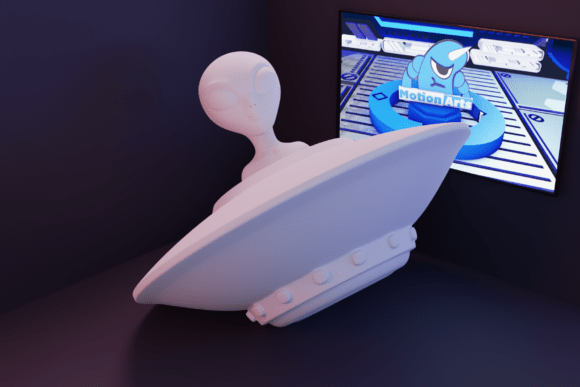
The Flying Saucer: Bridging Sci-Fi Nostalgia and Modern 3D Printing Technology
The concept of the Flying Saucer has captivated human imagination for nearly a century. From the early reports of unidentified flying objects in the mid-20th century to their ubiquitous presence in cinema and literature, the disc-shaped spacecraft remains an enduring icon of extraterrestrial speculation. Today, this cultural symbol has found a new medium through additive manufacturing. The availability of high-quality STL files allows enthusiasts, educators, and designers to bring these fictional vessels into the physical world with unprecedented precision. By leveraging modern 3D printing technology, creators can produce detailed models that serve not only as decorative pieces but also as tools for education, prototyping, and artistic expression.
The Evolution of the Disc-Shaped Spacecraft in Popular Culture
To understand the appeal of printing a Flying Saucer, one must first appreciate its historical significance. The term itself was coined in the late 1940s, describing aerial phenomena that defied conventional aerodynamic explanations. Unlike the rocket ships of early science fiction, which relied on fins and exhaust plumes, the saucer represented a leap in hypothetical propulsion technology—silent, smooth, and capable of impossible maneuvers. This design language suggested advanced engineering, free from the constraints of atmospheric drag.
In contemporary media, the saucer has evolved from a simple metallic disk to complex, multi-layered structures featuring glowing lights, intricate undercarriages, and weathered textures. This evolution presents unique challenges and opportunities for 3D modeling. A static image or a low-polygon video game asset often lacks the geometric complexity required for a satisfying physical print. However, modern digital sculpting tools allow for the creation of highly detailed meshes that capture the essence of these classic designs while ensuring they are manifold and printable.
Technical Considerations for 3D Printing Alien Spacecraft
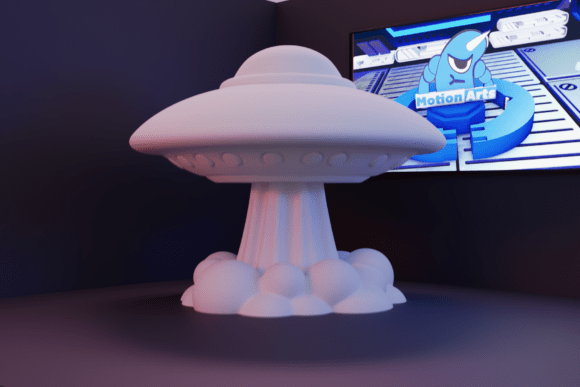
Printing a Flying Saucer model requires a nuanced understanding of slicer settings and material properties. The classic saucer shape, characterized by a wide, flat body and a central dome, presents specific structural considerations. The overhangs created by the rim of the saucer and the curvature of the dome often necessitate the use of support structures. Without proper support, these areas may sag or fail to adhere, resulting in a distorted final product.
When preparing the STL file for printing, users should pay close attention to orientation. Printing the saucer upright, with the dome facing up, typically yields the best surface quality for the top half of the model. However, this orientation may require extensive supports for the underside. Alternatively, printing the model on its side can reduce support usage but may introduce layer lines across the visible surfaces of the dome. Experimentation is key; reviewing the model in the slicer software allows users to visualize layer heights and support placement before committing to a print.
Material choice also plays a critical role. PLA (Polylactic Acid) is an excellent starting point due to its ease of use and minimal warping. It captures fine details well, making it suitable for display models. For those seeking a more durable or heat-resistant finish, PETG or ABS may be preferable, though these materials require careful temperature management and ventilation. Additionally, using a resin printer (SLA/DLP) can achieve superior detail resolution, particularly for smaller scales where layer lines might be more visible on FDM printers.
Applications Beyond Decoration
While many individuals print a Flying Saucer for personal collection or desk ornamentation, the utility of these models extends into various professional and educational domains. Educators, for instance, can use these prints to engage students in discussions about aerospace history, physics, and design. A tangible model serves as a powerful visual aid when explaining concepts such as lift, thrust, and aerodynamic stability, even if the subject matter is speculative.
In the realm of tabletop gaming and role-playing scenarios, sci-fi themed campaigns often require immersive props. A high-quality 3D printed saucer can serve as a centerpiece for terrain building, providing players with a realistic objective or obstacle. Game masters can further enhance these models by painting them to reflect different factions, damage states, or environmental conditions, adding depth to the narrative experience.
Designers and artists also find value in these models as base structures for customization. The basic saucer shape can be modified, scaled, or combined with other elements to create unique variations. This modularity encourages creativity, allowing users to experiment with different textures, colors, and附加 components. Whether used for stop-motion animation, film prop replication, or conceptual art, the versatility of the 3D printed saucer makes it a valuable asset in any creator's toolkit.
Navigating Digital Files and AI-Generated Designs
The proliferation of AI-generated 3D designs has expanded the library of available models, including those for the Flying Saucer. These AI-assisted creations often feature organic, complex geometries that might be difficult to model manually. However, it is important to approach these files with a critical eye. As noted in many digital marketplaces, AI-generated models may require additional cleanup in mesh editing software to ensure they are watertight and free of non-manifold edges.
Users should always review the file in their slicer software before printing. Checking for holes, inverted normals, or intersecting geometry can prevent print failures and wasted material. Furthermore, understanding that the digital representation is a starting point rather than a guaranteed outcome is crucial. Actual printed results will vary depending on the printer’s calibration, the quality of the filament or resin, and the specific slicer settings employed.
For those new to 3D printing, starting with a well-tested STL file is advisable. Look for models that have been reviewed by the community or come with recommended print settings. This reduces the learning curve and increases the likelihood of a successful first print. As proficiency grows, users can begin to experiment with more complex, AI-generated designs, applying their knowledge of support structures and orientation to achieve optimal results.
Customization and Post-Processing Techniques
The true potential of a 3D printed Flying Saucer is realized through post-processing. Raw prints, while impressive in their geometric accuracy, often benefit from additional finishing touches. Sanding can remove layer lines and smooth out imperfections, creating a sleek, metallic appearance reminiscent of classic sci-fi aesthetics. Priming the model before painting ensures better adhesion and color vibrancy.
Painting techniques such as dry brushing and washing can highlight the intricate details of the saucer’s surface. Dry brushing with a lighter color accentuates raised edges and textures, while a dark wash settles into recesses, adding depth and realism. For a more futuristic look, consider incorporating LED lights. Small, battery-operated LEDs can be embedded within the dome or along the rim, simulating the glowing engines or cockpit lights often depicted in movies.
Weathering is another effective technique, particularly for models intended for dioramas or gaming tables. Using specialized paints or powders, creators can simulate rust, scorch marks, or battle damage. This adds a narrative element to the model, suggesting a history of interstellar travel and conflict. The combination of precise 3D printing and skilled hand-finishing transforms a simple plastic object into a compelling piece of art.
The Role of Community and Sharing
The 3D printing community thrives on collaboration and sharing. Platforms dedicated to STL files allow users to upload their modifications, improvements, and original designs. By engaging with these communities, enthusiasts can discover new variations of the Flying Saucer, learn troubleshooting tips, and share their own successes. This collective knowledge base accelerates the learning process and fosters innovation.
Feedback loops between designers and printers are essential for refining models. Printers who encounter issues with a specific file can provide valuable insights to the designer, leading to updated versions that are easier to print and more visually appealing. This iterative process ensures that the quality of available models continues to improve, benefiting everyone involved in the ecosystem.
Ultimately, the act of printing a Flying Saucer is more than just replicating a shape; it is a participation in a broader cultural and technological movement. It connects the nostalgia of mid-20th-century science fiction with the cutting-edge capabilities of modern manufacturing. Whether for education, entertainment, or artistic exploration, the 3D printed saucer stands as a testament to human creativity and our enduring fascination with the unknown.