Pit Bull Sculpture: A 3D Printing Guide to Realistic Canine Art
The intersection of digital artistry and additive manufacturing has opened new avenues for hobbyists, collectors, and interior designers to bring high-fidelity sculptures into physical spaces. Among the most compelling subjects in this realm is the Pit Bull sculpture. Known for their muscular definition, expressive eyes, and stoic demeanor, Pit Bulls present a unique challenge and opportunity for 3D modelers. Capturing the essence of this breed requires more than just geometric accuracy; it demands an understanding of anatomy, posture, and the emotional weight the animal carries in popular culture.
This article explores the intricacies of printing a realistic Pit Bull sculpture, examining the technical requirements, aesthetic considerations, and practical applications of such a model. Whether you are a seasoned maker using industrial-grade resin printers or a hobbyist working with FDM technology, understanding the nuances of this specific subject matter will elevate the quality of your final output.
Anatomical Precision and Design Philosophy
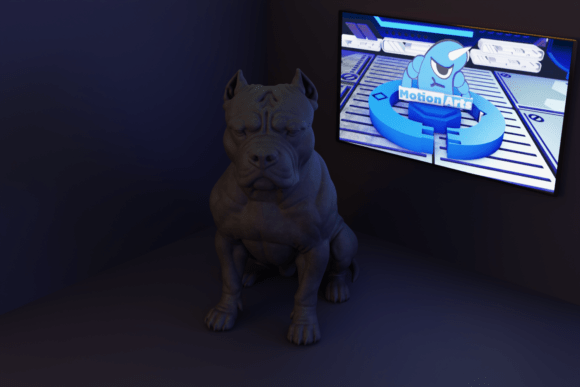
The appeal of a high-quality Pit Bull sculpture lies in its realism. Unlike stylized or cartoonish representations, a realistic model focuses on defined musculature and balanced anatomical proportions. The design philosophy behind such a model emphasizes strength and loyalty, traits often associated with the breed. In digital sculpting, this translates to careful attention to the shoulder blades, the curve of the spine, and the tension in the legs.
When evaluating a 3D model for printing, look for clear definitions in the muscle groups. The chest should appear broad and powerful, while the hindquarters must show the potential for explosive movement, even in a static pose. An imposing posture is critical; the head position, ear set, and tail alignment all contribute to the overall attitude of the piece. A well-designed model will capture the "alert" nature of the breed, creating a sense of presence that commands attention in any room.
For creators and collectors, the distinction between a generic dog model and a breed-specific sculpture is significant. The Pit Bull’s short coat means there is no fur texture to hide imperfections in the mesh. Every contour of the skin and muscle must be smooth and accurate. This level of detail ensures that the final print serves not just as a toy or figurine, but as a piece of art that reflects the dignity and power of the animal.
Technical Considerations for FDM and Resin Printing
Choosing the right printing technology is pivotal when producing a detailed sculpture. The Pit Bull sculpture is typically compatible with both Fused Deposition Modeling (FDM) and Stereolithography (SLA/DLP) resin printers, but each method offers distinct advantages and challenges.
FDM Printing Strategies
For those using FDM printers, layer height and orientation are the primary concerns. To achieve a professional finish, a layer height of 0.1mm or lower is recommended. This reduces the visibility of layer lines, which can be particularly distracting on the smooth surfaces of the dog’s body. Orientation plays a crucial role in structural integrity. Printing the model standing on all fours usually provides the most stable base, minimizing the need for excessive support structures on the underside.
However, overhangs such as the chin, ears, and tail may still require supports. It is essential to use soluble supports if available, or carefully place tree supports to minimize contact marks on visible areas. Post-processing for FDM prints involves sanding and potentially filling gaps with epoxy putty to smooth out the layered texture, followed by priming and painting to enhance the realistic effect.
Resin Printing Advantages
Resin printers excel at capturing fine details, making them ideal for complex organic shapes like a Pit Bull. The isotropic nature of resin prints means there are no visible layer lines in the same way as FDM, resulting in a smoother surface straight off the build plate. For a model with defined musculature, resin allows for the subtle gradations of muscle tone to be preserved without the stair-stepping effect common in filament printing.
Support placement in resin printing requires precision. Supports should be placed on non-visible areas, such as the underbelly or the back of the legs, to avoid marring the aesthetic of the sculpture. Because resin models can be brittle, ensuring a solid structure with adequate wall thickness or infill density is vital to prevent breakage during cleaning and handling. The model’s balanced anatomical proportions help distribute weight evenly, reducing the risk of warping or detachment from the build plate during the print process.
Post-Processing and Finishing Techniques
The journey from a digital STL file to a finished Pit Bull sculpture does not end when the printer stops. Post-processing is where the model truly comes to life. Regardless of the printing method used, cleaning and curing are essential first steps. For resin prints, thorough washing in isopropyl alcohol and proper UV curing ensure the material reaches its maximum hardness and stability.
Surface preparation is key to achieving a professional look. Sanding with progressively finer grits of sandpaper removes support marks and minor imperfections. For FDM prints, this step is more labor-intensive but equally rewarding. Once the surface is smooth, applying a primer helps to unify the texture and provides a better base for paint adhesion.
Painting allows for creative expression and realism. Using acrylic paints, artists can replicate the natural coat colors of Pit Bulls, ranging from solid blacks and whites to brindle and blue noses. Dry brushing techniques can highlight the defined musculature, adding depth and dimension to the sculpture. Adding a gloss varnish to the nose and eyes can create a lifelike wet look, enhancing the overall realism of the piece.
Applications and Use Cases
The versatility of a 3D printed Pit Bull sculpture makes it suitable for various applications beyond simple display. For breed lovers and owners, it serves as a personalized tribute to their pets, capturing the unique spirit of their companions. These sculptures can be customized with different poses or accessories, making each print unique.
In interior design, such a sculpture adds a touch of elegance and attitude to modern spaces. Its imposing posture and striking presence make it a conversation starter in living rooms, offices, or studios. The solid structure and balanced proportions ensure it stands securely on shelves, desks, or mantelpieces.
Educators and researchers may also find value in these models. Anatomically accurate sculptures can be used to teach students about canine physiology, muscle structure, and breed characteristics. For veterinary students, having a tangible, scaled model can aid in understanding spatial relationships within the animal’s body.
Additionally, these models appeal to collectors of 3D printed art. As the quality of consumer-grade printers improves, the demand for high-detail, artistically driven models grows. A well-executed Pit Bull sculpture represents the pinnacle of what home manufacturing can achieve, blending technical skill with artistic vision.
Ensuring Print Success and Stability
To ensure a successful print, several factors must be considered before starting the job. First, verify the integrity of the STL file. Ensure there are no non-manifold edges or holes in the mesh, which can cause slicing errors. Most reputable sources provide watertight models, but a quick check in repair software is a good practice.
Support generation is another critical step. While the model is designed for stable printing, automatic support generation may not always be optimal. Manual adjustment of support density and placement can prevent sagging in delicate areas like the ears and tail. For intermediate-level printers, taking the time to customize support settings can significantly improve the final outcome.
Material selection also impacts the final result. For FDM, PLA is easy to print and offers good detail, while PETG provides greater durability and heat resistance. For resin, standard grey or white resins are excellent for painting, while tough resins offer better impact resistance for handling. Choosing the right material depends on the intended use and environment of the sculpture.
Finally, patience is essential. Rushing the printing or post-processing stages can lead to subpar results. Allowing sufficient time for cooling, curing, and drying ensures that the Pit Bull sculpture maintains its structural integrity and aesthetic appeal. By following these guidelines, makers can produce a high-quality representation of this powerful and loyal breed, adding a distinctive element to their 3D collection.
In conclusion, the creation of a Pit Bull sculpture through 3D printing is a rewarding endeavor that combines technical precision with artistic appreciation. From the initial selection of a realistic model to the final touches of paint and varnish, each step contributes to the emergence of a striking piece of art. Whether for personal enjoyment, educational purposes, or decorative display, this project exemplifies the potential of modern manufacturing to bring digital designs into the physical world with clarity and impact.